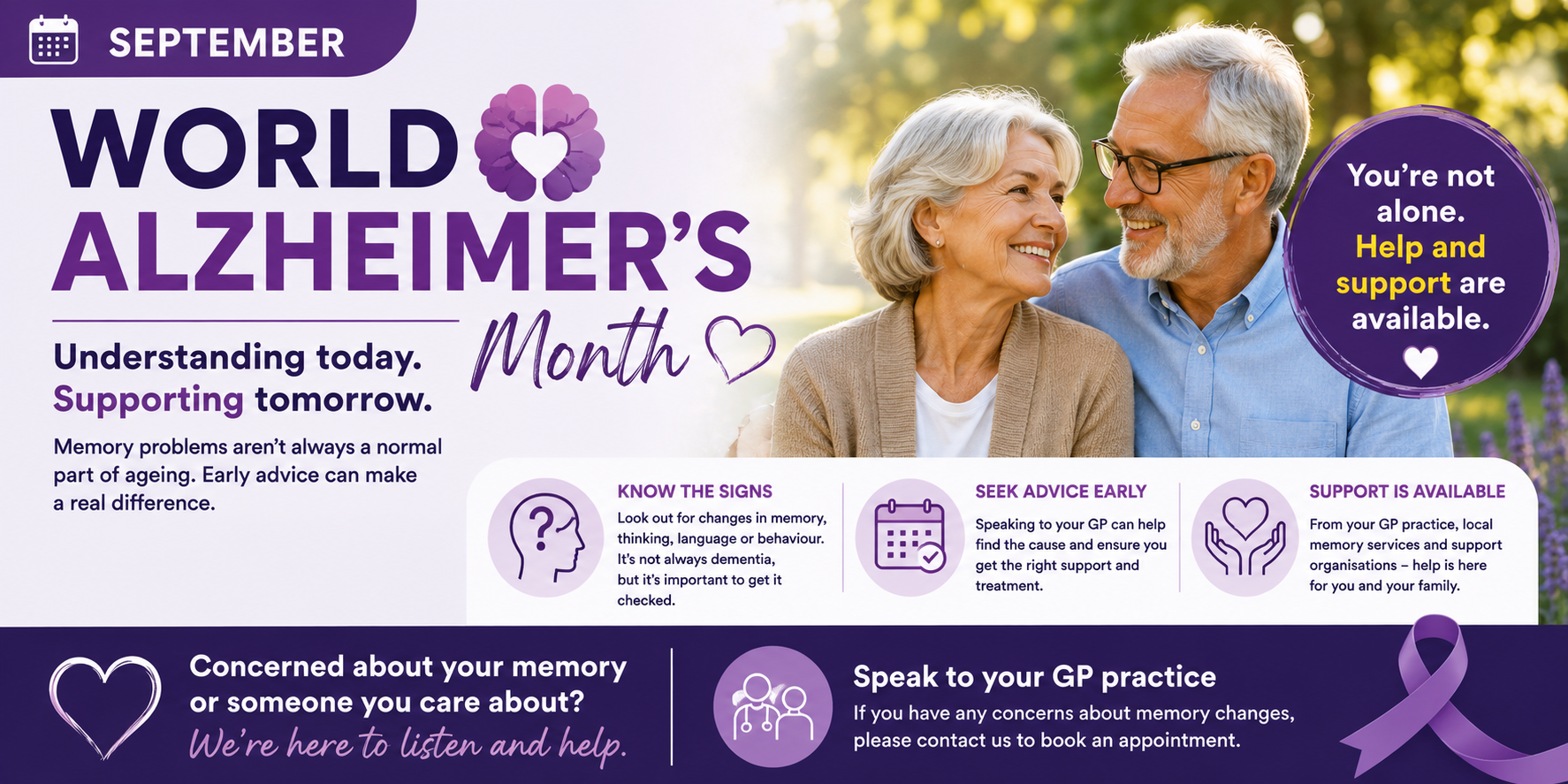
Every September, World Alzheimer’s Month raises awareness of dementia, helping to reduce stigma, improve understanding, and encourage people to seek support if they have concerns about their memory or that of a loved one.
Many people worry that memory loss is simply a normal part of ageing. While it’s common to become a little more forgetful as we get older, persistent or worsening memory problems should not be ignored. Seeking advice early can help identify the cause and ensure the right support is available.
What Is Alzheimer’s Disease?
Alzheimer’s disease is the most common cause of dementia, affecting memory, thinking, language and the ability to carry out everyday tasks.
Dementia is not a normal part of ageing. It is an umbrella term for a group of conditions that affect the brain, with Alzheimer’s disease being the most common type.
Although there is currently no cure, an early diagnosis can help people access treatment, support and advice to help them live well for as long as possible.
Signs to Look Out For
Everyone forgets things from time to time, but it may be worth speaking to your GP if you or someone close to you notices ongoing changes such as:
- Frequently forgetting recent conversations or events.
- Asking the same questions repeatedly.
- Difficulty finding the right words.
- Becoming confused about time or place.
- Struggling with familiar daily tasks.
- Changes in mood, personality or behaviour.
These symptoms do not always mean someone has dementia, but they should be assessed by a healthcare professional.
Why Early Assessment Matters
There are many reasons why someone may experience memory problems, including stress, anxiety, depression, vitamin deficiencies, medication side effects or other medical conditions.
Speaking to your GP can help identify the cause and, where appropriate, arrange further assessment or referral to specialist memory services.
An early diagnosis can also help individuals and families:
- Understand what is happening.
- Plan for the future.
- Access treatment and local support services.
- Improve quality of life.
Looking After Your Brain Health
While it’s not always possible to prevent dementia, there are steps that may help reduce your risk and support your overall brain health:
- Stay physically active.
- Eat a healthy, balanced diet.
- Keep your blood pressure, cholesterol and diabetes well managed.
- Don’t smoke.
- Drink alcohol within recommended limits.
- Stay socially connected.
- Keep your mind active by learning new skills, reading or doing puzzles.
These healthy habits also support your heart health, which is closely linked to brain health.
How Our GP Practice Can Help
At Ivel Medical Centre we’re here to support you if you have concerns about your memory or cognitive health.
If you or someone you care about has noticed changes in memory, thinking or behaviour, please don’t ignore them. Our clinicians can:
- Listen to your concerns.
- Carry out an initial assessment.
- Discuss possible causes.
- Arrange appropriate investigations if needed.
- Refer you to specialist memory services where appropriate.
Seeking advice early can help you access the support and information you need.
You’re Not Alone
World Alzheimer’s Month reminds us that no one should face dementia alone.
Whether you’re concerned about your own memory or supporting a loved one, help is available. Speaking to your GP is often the first step towards understanding what’s happening and accessing the right care and support.
If you have concerns about memory changes, please contact Ivel Mediclto arrange an appointment with one of our clinicians.