Mental capacity means a person’s ability to understand and make a particular decision at the time it needs to be made.
Under the Mental Capacity Act 2005, capacity is decision-specific and time-specific. This means a person may be able to make some decisions but not others, and their capacity may change over time.
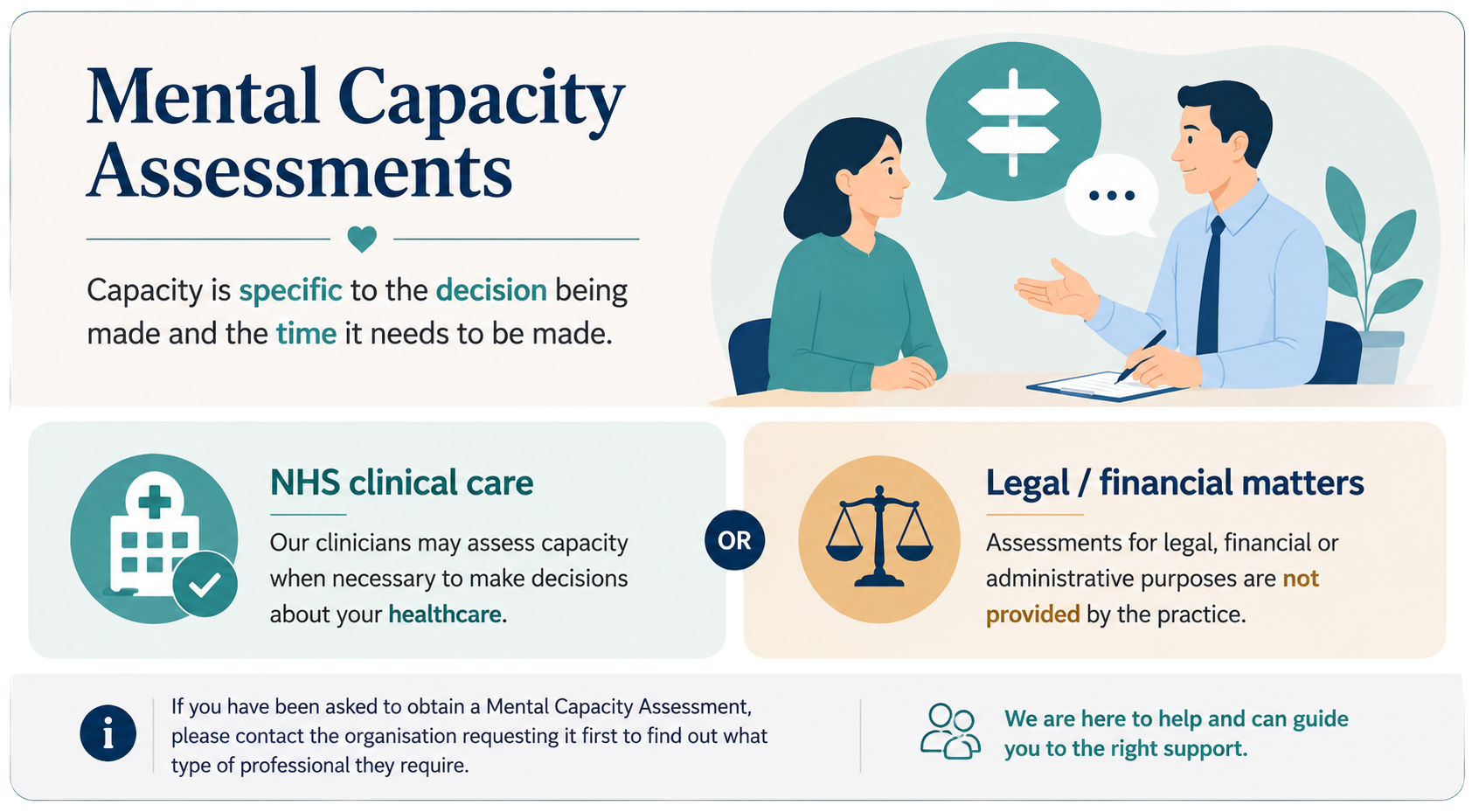
Capacity assessments as part of your NHS care
As part of providing NHS healthcare, our clinicians may assess a patient’s mental capacity where this is necessary to make decisions about their care.
This may include decisions about:
- Medical examinations or investigations
- Treatment options
- Ongoing healthcare and clinical care
These assessments form part of the patient’s NHS clinical care and will be documented in their medical record.
Assessments we do not provide
I would make this heading slightly less harsh than “Requests we are unable to provide.”
The practice does not provide Mental Capacity Assessments solely for legal, financial or administrative purposes.
This includes assessments relating to:
- Lasting Powers of Attorney (Health and Welfare or Property and Financial Affairs)
- Court of Protection applications
- Wills
- Property or financial decisions
- Other legal or welfare matters
These assessments fall outside routine NHS general practice and may require a professional with specialist knowledge of the relevant legal framework.
Who can help?
The appropriate professional will depend on the reason the assessment is required.
You may be advised to contact:
- A solicitor
- An appropriate specialist clinician
- An independent Mental Capacity Assessor, where appropriate
- Adult Social Care or your local authority
- The organisation requesting the assessment, who may be able to advise who is authorised or appropriate to complete it
If you have been given a form or asked to obtain a Mental Capacity Assessment, we recommend contacting the organisation requesting it first to find out what type of professional they require.
Our Practice Policy
Our clinicians will assess mental capacity where this is clinically necessary as part of a patient’s NHS care.
The practice does not undertake Mental Capacity Assessments solely for legal, financial or administrative purposes.