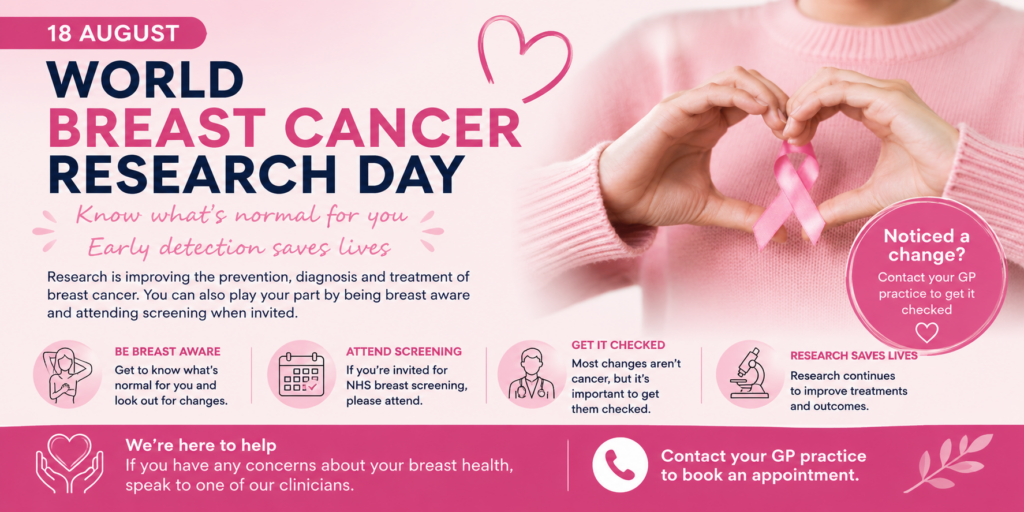
18th August 2026 marks World Breast Cancer Research Day, a day that highlights the importance of research in improving the prevention, diagnosis and treatment of breast cancer. It is also an opportunity to raise awareness of breast health and encourage people to become familiar with what is normal for them.
Breast cancer is the most common cancer in women in the UK, although it can also affect men. Thanks to advances in research, earlier diagnosis and improved treatments, more people than ever are surviving breast cancer. Recognising changes early and attending routine screening appointments continue to play an important role in improving outcomes.
Know What’s Normal for You
There is no single “normal” look or feel for breasts. That’s why it’s important to be familiar with how your breasts normally look and feel so you are more likely to notice any unusual changes.
Changes to look out for include:
- A new lump or thickening in the breast or armpit.
- A change in the size or shape of one or both breasts.
- Changes to the skin, such as dimpling or puckering.
- Redness or a rash on or around the nipple.
- A nipple that becomes pulled in (inverted) when it wasn’t before.
- Unusual discharge from the nipple, particularly if it is blood-stained.
- Persistent pain in one part of the breast that is unusual for you.
Most breast changes are not caused by cancer, but it’s important to have any new or unusual changes checked by a healthcare professional.
The Importance of Breast Screening
The NHS Breast Screening Programme aims to detect breast cancer at an early stage, often before symptoms develop.
In England, women registered with a GP are routinely invited for breast screening every three years between the ages of 50 and 71. If you’re invited, attending your appointment is one of the best ways to help detect breast cancer early, when treatment is more likely to be successful.
Breast screening does not prevent breast cancer, but it can help find cancers earlier than they might otherwise be detected.
Research Continues to Save Lives
World Breast Cancer Research Day recognises the scientists, healthcare professionals and patients who contribute to research that has transformed breast cancer care.
Ongoing research continues to improve:
- Earlier diagnosis.
- More effective and personalised treatments.
- Better understanding of risk factors.
- Improved quality of life during and after treatment.
These advances mean that survival rates continue to improve, giving hope to thousands of people and their families every year.
How Your GP Practice Can Help
At Ivel Medical Centre, we’re here to support you with any concerns about your health.
If you notice any changes to your breasts or have concerns you’d like to discuss, please don’t delay in contacting the practice. Our clinicians can assess your symptoms, provide advice, and, if appropriate, arrange further investigations or refer you to specialist services.
If you’ve received an invitation for NHS breast screening, we encourage you to attend your appointment, even if you feel well. Screening is an important part of looking after your health.
Looking After Your Breast Health
This World Breast Cancer Research Day, take a few moments to become familiar with your breasts and encourage those around you to do the same.
Knowing what’s normal for you, attending breast screening when invited, and seeking medical advice if you notice any changes can all help with the early detection of breast cancer.
If you have any concerns, please contact us to arrange an appointment with one of our clinicians. We’re here to listen, provide advice, and ensure you receive the care and support you need.